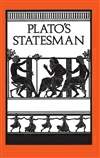
Statesman
- 中文名:
- 政治家篇
- 作者:
- 柏拉图 Plato
- 类型:
- 哲学
- 可下载格式:
- 收藏和分享政治家篇:
- 政治家篇(Statesman)简介:
The Statesman, or Politikos in Greek and Politicus in Latin, is a four part dialogue contained within the work of Plato.
The text is a dialogue between Socrates and the mathematician Theodorus, another student named Socrates (referred to as Young Socrates), and an unknown philosopher expounding the ideas of the statesman. This unknown philosopher from Elea is referred to in the text as the "visitor".
The text is a continuation of the dialogue preceding it, named Sophist , which is a dialogue between Socrates, Theaetetus and the visitor.
According to John M. Cooper, the dialogue's intention was to clarify that to rule or have political power called for a specialized knowledge.[1] The statesman was one who possesses this special knowledge of how to rule justly and well and to have the best interests of the citizens at heart. It is presented that politics should be run by this knowledge, or gnosis. This claim runs counter to those who, the visitor points out, actually did rule. Those that rule merely give the appearance of such knowledge, but in the end are really sophists or imitators.
For, as the visitor points out, a sophist is one who does not know the right thing to do, but only appears to others as someone who does. The visitor's ideal of how one arrives at this knowledge of power is through social divisions. The visitor takes great pains to be very specific about where and why the divisions are needed in order to properly rule the citizenry.
柏拉图的作品
- 《蒂迈欧篇》Timaeus [PDF TXT]
- 《查米德斯》Charmides [PDF]
- 《克里提亚》Critias [PDF]
- 《议论者》Euthydemus [PDF TXT]
- 《论勇气》Laches [PDF TXT]
- 《泰阿泰德篇》Theaetetus [PDF TXT]
- 《申辩篇》Apology [PDF]
- 《会饮篇》Symposium [PDF TXT]
- 《理想国》The Republic [PDF]
- 《克利托》Crito [PDF]
- 《斐多篇》Phaedo [PDF]
- 《美诺篇》Meno [PDF TXT]
- 《普罗泰戈拉》Protagoras [PDF]
- 《欧蒂弗罗篇》Euthyphro [PDF TXT]
相关书籍
- 《克尔恺郭尔:存在主义模式中的基督教式思考》Kierkegaard: Thinking Christianly in an Existential Mode [PDF]
- 《心灵冲突》Mental Conflict [PDF]
- 《哈贝马斯:简介》Habermas: A Very Short Introduction [PDF]
- 《蒂迈欧篇》Timaeus [PDF TXT]
- 《政治哲学:简介》Political Philosophy: A Very Short Introduction [PDF]
- 《哲学的问题》The Problems of Philosophy [PDF]
- 《西方哲学史》A History of Western Philosophy [PDF]
- 《文化理论:关键概念 第二版》Cultural Theory: The Key Concepts Second Edition [PDF]
- 《无政府主义:简介》Anarchism: A Very Short Introduction [PDF]
- 《波普尔和社会科学》Karl Popper And the Social Sciences [PDF]
赞助商